
Trekking poles are the first thing many people picture on a steep trail, but a runner's question is narrower: do poles reduce fatigue on your climbs enough to justify carrying them in a vest? This guide answers that with the running poles we list. These are ultralight carbon running poles, not hiking trekking poles, and we do not list trekking models. Once you know whether you need poles, compare the Black Diamond Distance Carbon Z, Leki Ultratrail FX.One, Salomon MTN Carbon S/LAB, and CAMP Nanotech Carbon.
Quick answer
Most trail runners do not need poles on every run. Poles earn their place on sustained climbs and long ultramarathon efforts, and the Black Diamond Distance Carbon Z Poles are the reference pick here, at about 140g per pole in the 120 cm size.
This guide contains affiliate links. TrailCadence may earn a commission at no cost to you.
Do you need poles on every trail run?
Most trail runs on runnable terrain do not need poles at all. Poles pay off when a route forces sustained climbing, because the arms can share work the legs would otherwise carry alone.
On flat or rolling courses, a pole like the Black Diamond Distance Carbon Z Poles mostly adds weight to carry and one more thing to manage, with little return. Use poles where walking steep sections is part of the plan.
Check race rules before you buy. Mandatory gear lists and pole rules change by event and by year, so confirm the current rules for your specific race before buying poles for it.

Black Diamond Distance Carbon Z Poles
The Z-fold carbon standard at about 140g per pole in the 120 cm size: packs down for vest carry, stiff carbon shafts, and an ergonomic foam grip.
What weight and folded size should you look for in a running pole?
CAMP Nanotech Carbon is the lightest Z-fold pole we list at 119g per pole and $175 to $200, which makes it the pick for runners who count grams.
Black Diamond's Distance Carbon Z weighs about 140g per pole in the 120 cm size, costs about $220, and folds into a compact Z bundle, the vest-carry benchmark in this guide, so the Black Diamond Distance Carbon Z Poles is the balanced choice between weight and packability.
The Leki Ultratrail FX.One costs $200 to $250 and weighs 167g per pole at 120 cm, noticeably heavier, and is the choice when grip comfort matters more than the last few grams.

CAMP Nanotech Carbon Trail Running Poles
An Italian-made foldable carbon pole at 119g per pole, making it the lightest option in the competitive Z-fold category.
Black Diamond Distance Carbon Z Poles
The Z-fold carbon standard at about 140g per pole in the 120 cm size: packs down for vest carry, stiff carbon shafts, and an ergonomic foam grip.
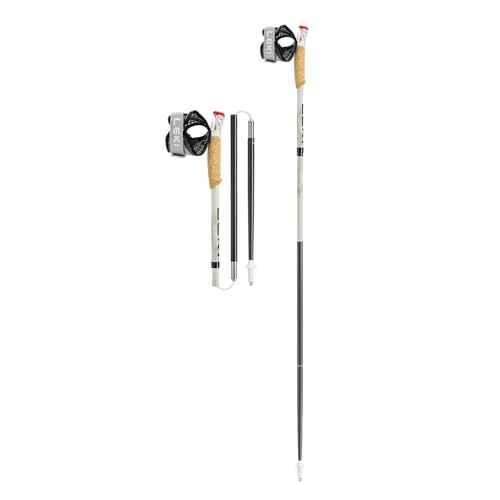
Leki Ultratrail FX.One Poles
A foldable carbon pole with the Leki Trail Trigger Shark grip and push-button folding system for runners who want a more ergonomic handle than Black Diamond offers.
Should you choose Z-fold or telescoping poles for a vest?
Z-fold poles such as Black Diamond Distance Carbon Z collapse into a compact bundle for vest carry, while telescoping poles adjust length but are slower to stow.
The tradeoff is fixed length on many Z-fold poles. Poles are usually shortened for climbs and lengthened for descents, and a fixed-length Z-pole such as the Distance Carbon Z can do neither. Adjustable Z-poles exist, such as Black Diamond's Distance Carbon FLZ, which adds roughly 15 to 20 cm of adjustment for a few more ounces, so compare both styles against the grades you run most often.
Size before you buy. A common starting point is your height in centimeters multiplied by 0.66, and fixed-length folding poles are sized at manufacture, so measure before ordering.
Black Diamond Distance Carbon Z Poles
The Z-fold carbon standard at about 140g per pole in the 120 cm size: packs down for vest carry, stiff carbon shafts, and an ergonomic foam grip.
Which grip and shaft design suits long climbs?
The Leki Ultratrail FX.One is the grip-focused pick here, with a Trail Trigger Shark grip shaped for extended carry and a push-button folding system.
The Salomon MTN Carbon S/LAB Poles use a tapered carbon shaft that reduces oscillation on steep climbs, and they integrate with Salomon vest systems.
That integration only helps if you already run Salomon kit, so it is not a reason to buy the pole on its own.
Leki Ultratrail FX.One Poles
A foldable carbon pole with the Leki Trail Trigger Shark grip and push-button folding system for runners who want a more ergonomic handle than Black Diamond offers.
Salomon MTN Carbon S/LAB Poles
The Salomon race pole with a tapered carbon shaft, competition-grade tip, and Salomon race vest integration for clean pole carry.
Who should skip running poles entirely?
Runners whose routes are mostly flat or runnable should skip poles, because the carry and handling cost is not repaid on terrain that does not need them.
Newer trail runners should settle vest fit and fueling before adding poles, since those decide race day more directly than a hand-held tool does.
Once your races include long climbs, add poles and practice on training runs first. Early outings feel awkward, and clumsy pole technique wastes more energy than it saves.
Black Diamond Distance Carbon Z Poles
The Z-fold carbon standard at about 140g per pole in the 120 cm size: packs down for vest carry, stiff carbon shafts, and an ergonomic foam grip.
Leki Ultratrail FX.One Poles
A foldable carbon pole with the Leki Trail Trigger Shark grip and push-button folding system for runners who want a more ergonomic handle than Black Diamond offers.
Salomon MTN Carbon S/LAB Poles
The Salomon race pole with a tapered carbon shaft, competition-grade tip, and Salomon race vest integration for clean pole carry.
CAMP Nanotech Carbon Trail Running Poles
An Italian-made foldable carbon pole at 119g per pole, making it the lightest option in the competitive Z-fold category.
FAQ
Frequently asked questions
Are trekking poles the same as running poles?+
No. The poles in this guide are ultralight carbon running poles chosen for light weight and vest carry, and we do not list hiking trekking models. If your main use is hiking with a heavy pack, look for trekking poles in a hiking gear guide.
Do running poles help on flat trail?+
Usually very little. On flat or rolling trail, poles add carry weight and a hand to manage, and the benefit is small compared with steep sections. They are most useful on sustained climbs and on long efforts where walking hills is part of the plan.
Are poles allowed in ultramarathons?+
It depends on the race. Pole rules are set by each event and can change year to year, so check the current gear list and pole rules for your specific race before you buy or train with poles for it. If poles are allowed, practice stowing them in your vest before race day so they do not swing or snag.
Which running pole should I buy first?+
The Black Diamond Distance Carbon Z is the default starting point, at about $220 with a 4.7 rating and about 140g per pole in the 120 cm size. If grip comfort on long climbs matters more than the lightest weight, the Leki Ultratrail FX.One is the alternative at $200 to $250 and 167g per pole.