Petzl Nao RL vs Swift RL: Race Lamp or the Lighter Reactive Lamp?

Updated September 2026

Both use Petzl REACTIVE lighting that adjusts output to what you look at. The Nao RL puts out 1500 lumens through a split beam that lights the trail and the horizon, with a 3200 mAh USB-C battery and app runtime monitoring, at $125 to $140. The Swift RL puts out 900 lumens in a single beam from a 73 gram package, at $85 to $100.

This comparison contains affiliate links. As an Amazon Associate and partner of other programs, TrailCadence may earn a commission at no cost to you.

At a glance

Spec Petzl Nao RL Headlamp Check price on Amazon Petzl Swift RL Headlamp Check price on Amazon
Price $125-$140 $85-$100
Our rating 4.8 / 5 4.6 / 5
Best for Ultramarathon runners who will be running technical trails at night in a race or overnight effort. Trail runners who want REACTIVE technology in a lighter, more affordable package than the Nao RL.
Maximum output 1500 lumens 900 lumens
Beam Split beam, trail and horizon Single beam
Weight Heavier, rear battery 73 grams
Runtime at max Longer, 3200 mAh with app monitoring About 9 hours
Charging USB-C Rechargeable
Price $125 to $140 $85 to $100

Nao RL for all-night races and the split beam; Swift RL for lighter weight, lower cost and shorter dark sections.

The two options in depth

Petzl (AvantLink)
Petzl Nao RL Headlamp Best Value
4.8 Editorial score / 5.0

Petzl Nao RL Headlamp

1500 lumens with REACTIVE lighting that automatically adjusts output, a rechargeable 3200 mAh battery, and a split-beam design that covers trail and horizon simultaneously.

Best for Ultramarathon runners who will be running technical trails at night in a race or overnight effort.
  • 1500 lumens reactive lighting adjusts automatically to ambient conditions
  • Split beam covers both the trail directly ahead and the horizon for navigation
  • Rechargeable via USB-C with runtime monitoring in the MyPetzl app
  • Premium price is higher than most runners need for casual night running
Price $125-$140 Check price on Amazon
Petzl (AvantLink)
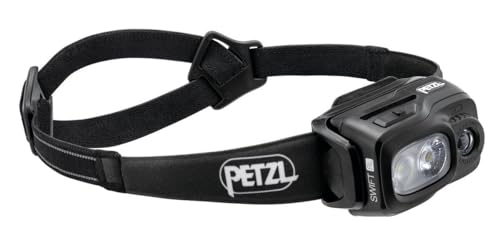
Petzl Swift RL Headlamp
4.6 Editorial score / 5.0

Petzl Swift RL Headlamp

900 lumens reactive lighting in a 73g package: the most lightweight Petzl with REACTIVE technology for runners who count grams.

Best for Trail runners who want REACTIVE technology in a lighter, more affordable package than the Nao RL.
  • 73g is exceptionally light for a reactive headlamp at this lumen level
  • 900 lumens is sufficient for technical trail running at night
  • Same REACTIVE technology as the Nao RL at a lower price point
  • 9-hour runtime at maximum output is shorter than some competitors

Which should you buy?

Buy the Nao RL if you race 100K and longer or run technical trails through a full night; the split beam shows roots at your feet and the trail ahead at once, and the larger battery with app monitoring takes the guesswork out of a long dark section. Buy the Swift RL for 50K night sections, early-morning training and anyone who notices headlamp weight; 900 reactive lumens is enough for technical trail, and it costs and weighs less. Both need one training run in reactive mode before race night so you trust the automation.

Related guides

Common questions

Is 900 lumens enough for technical trail at night?

Yes for most runners, especially in reactive mode where the lamp brightens on demand. The Nao RL's extra output matters most on fast descents and in fog, where a wider, brighter throw helps.

Can I run the Nao RL battery all night?

In reactive mode on typical trail, a full charge covers most night sections, and the app shows remaining time. For a full 100-mile night, carry the spare battery or a power bank for USB-C top-ups at aid stations.

Does reactive lighting drain the battery faster?

The opposite. It lowers output whenever you look at something close or bright, which is where the runtime savings come from. It does take a run or two to stop noticing the adjustments.

Which lamp bounces less?

The Swift RL, because it is lighter and front-loaded. The Nao RL balances its battery on the back of the head, which most runners find stable once the band is snug.